When Survival Mode Becomes the Norm: Understanding Burnout in Veterinary Medicine


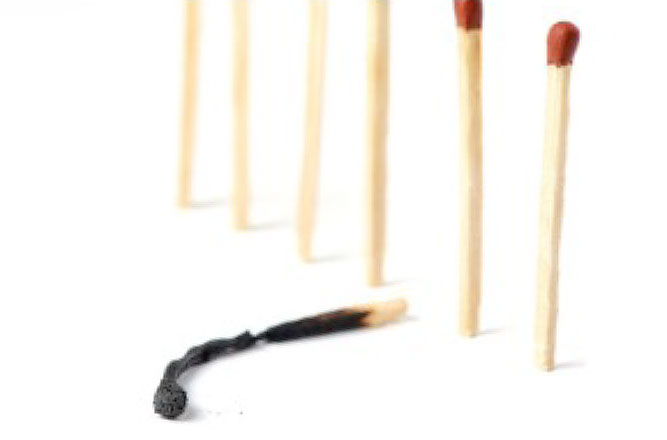
Burnout is a nervous system stuck in survival mode after years of overachieving.
That idea stopped me in my tracks because it describes so much of what we see, what we live, in veterinary medicine.
We have an industry full of people who care deeply, work hard, hold themselves to incredibly high standards, and are accustomed to figuring it out. We stay late. We skip lunch. We answer the message after hours. We take one more appointment because someone needs us. We tell ourselves we’ll rest after the next emergency, the next staffing crisis, the next busy season.
And then you realize, the next busy season never seems to end.
But what does burnout actually look like?
Burnout doesn’t always look like someone falling apart at work.
Sometimes it looks like the veterinarian who used to love medicine becoming increasingly cynical or detached. The technician who is technically excellent but has stopped suggesting improvements because, “What’s the point?” The practice manager who is constantly solving everyone else’s problems but has no energy left for their own.
It can look like irritability, impatience, emotional exhaustion, difficulty concentrating, dread about coming to work, withdrawing from coworkers, or feeling numb about things that used to matter.
It can also look like over functioning.
The person who says yes to everything. The person who can’t delegate because it feels faster to do it themselves. The person who keeps raising the bar while quietly becoming more exhausted. The person who looks incredibly capable from the outside while running on fumes internally.
And that’s an important distinction: burnout isn’t necessarily a lack of resilience. Sometimes it is the result of resilience being demanded for too long.
So, how do we support ourselves?
We have to stop treating exhaustion as a personal failure.
Start by paying attention to the signals before they become a crisis. Are you constantly on edge? Are small problems creating disproportionately big reactions? Are you sleeping but never feeling rested? Have you lost your sense of humor? Are you avoiding people or responsibilities you normally enjoy?
Those are not character flaws. They are signals.
Build recovery into your schedule. Protect meals. Take the day off. Turn off notifications. Use your PTO. Create boundaries around when you are and aren’t available. And, perhaps most importantly, learn to delegate before you are desperate.
And what about our teams?
We can’t tell our teams to “take care of themselves” while rewarding the people who consistently sacrifice themselves for the practice.
Leaders have to look at the systems surrounding the people.
Do employees have reasonable, shared workloads? Are schedules perpetually overbooked? Are breaks actually possible and encouraged? Are expectations clear? Can someone say, “I can’t take one more thing today,” without being viewed as ‘emotional’ or ‘weak’?
We also need to normalize conversations about capacity, not just performance.
Instead of asking only, “Did you get everything done today?” sometimes ask, “Did you have what you needed to get through the day?” Because a team that can survive anything isn’t necessarily a healthy team.
The goal shouldn’t be to build veterinary professionals who can tolerate more stress. The goal should be to build practices where people don’t have to live in survival mode just to succeed.
We all care so deeply about our patients, our clients, our teams, and our medicine, but that doesn’t mean we have to prove it by running ourselves into the ground.
Written by Meghan Bingham, CVPM